
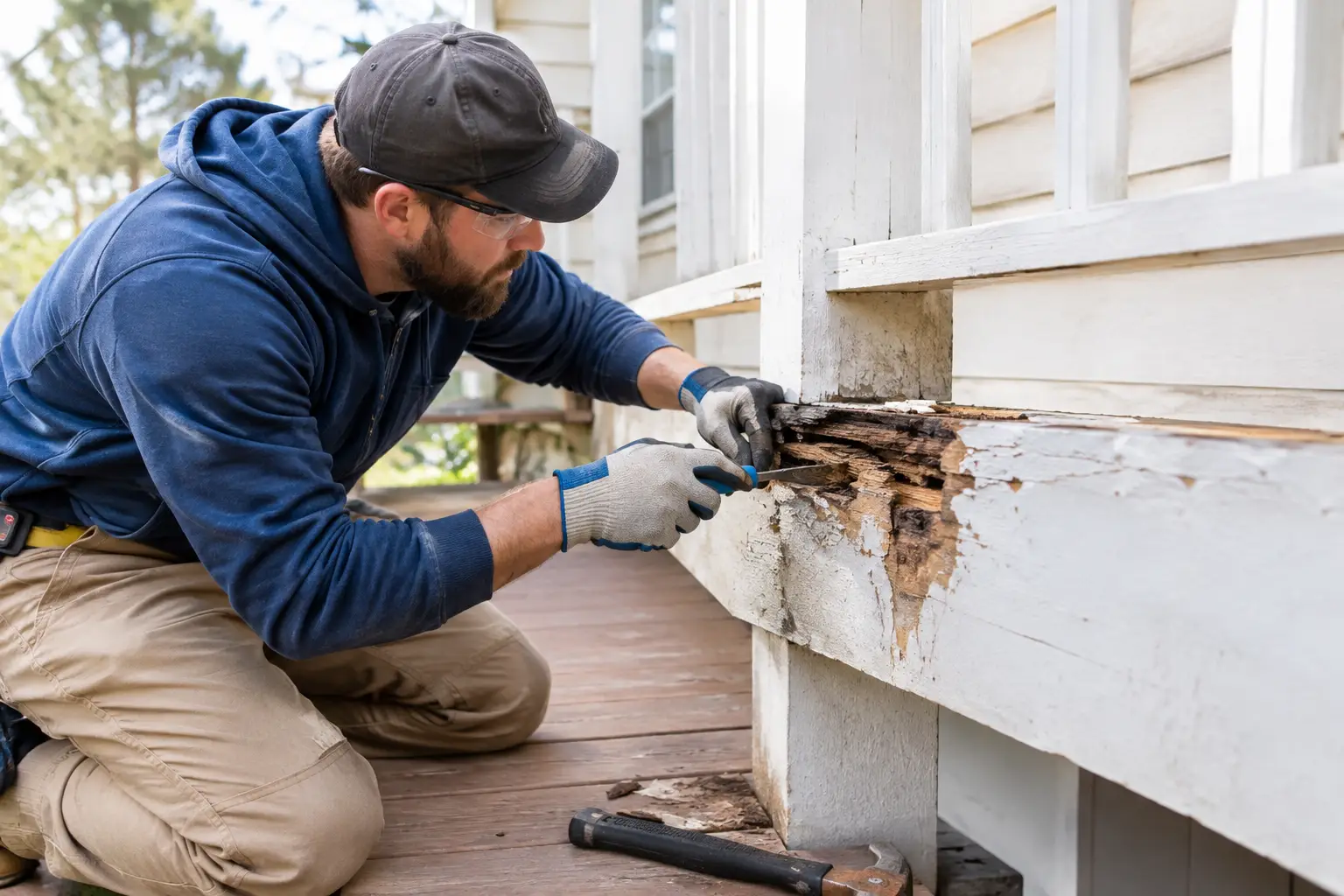
A soft spot around a window, a peeling porch post, or crumbling trim at the corner of the house is rarely just a cosmetic issue. Carpentry repair for wood rot addresses the visible damage, but it also requires finding the moisture problem that allowed the wood to break down in the first place. A thoughtful repair protects your home’s exterior, preserves the parts that are still sound, and helps prevent a small repair from becoming a larger replacement project.
For Tulsa-area homeowners, wood rot often appears where rainwater repeatedly lands, drains poorly, or becomes trapped against painted wood. Exterior trim, siding, deck boards, railings, window frames, door frames, and porch components all need attention when the finish begins to fail. The good news is that not every damaged board means an entire wall, deck, or porch must be rebuilt. The right answer depends on how far the rot has traveled and whether the underlying structure remains solid.
What Wood Rot Looks Like Before It Gets Worse
Wood rot is decay caused by fungi that thrive when wood stays wet long enough. Paint may be the first thing homeowners notice, but paint is not always the problem. It is often the warning sign that moisture has gotten behind or beneath the surface.
Look closely for paint that bubbles, cracks, or peels in one recurring area. Wood that feels spongy when pressed, flakes apart at the edges, or accepts a screwdriver unusually easily also deserves a closer look. Dark staining, open joints, soft areas near fasteners, and trim that has pulled away from the house can all point to water intrusion.
Some rot stays contained in a small piece of exterior trim. Other damage begins at a failed joint, then works behind siding or around an opening. That difference matters. Replacing a visibly damaged board without addressing the water path may make the home look better for a while, but the same issue can return.
Common places moisture causes trouble
Window and door trim are frequent problem areas because openings need careful flashing, sealing, and drainage. Water can also collect at horizontal trim boards, around exterior corners, and where different materials meet.
Decks and porches face another set of challenges. Board ends, post bottoms, railing connections, stair stringers, and areas near the ground are exposed to repeated moisture. If leaves, soil, or planters hold water against the structure, even well-built wood can deteriorate faster than expected.
When Carpentry Repair for Wood Rot Makes Sense
Repair is often a sensible option when the damage is localized and the surrounding wood is firm. A skilled carpenter can remove the decayed section, evaluate what remains, and install replacement material that fits the home’s existing details. This approach is especially useful for exterior trim, small siding sections, decorative elements, and isolated deck or porch components.
The goal is not to cover over soft wood. Proper repair means cutting back to sound material, creating a stable connection for the new piece, and preparing the area so water can shed away rather than collect. Depending on the location, that may also involve correcting a joint, adding or repairing flashing, improving drainage, or replacing failed caulk and paint after the woodwork is complete.
Matching matters, too. Older homes may have trim profiles or siding dimensions that are difficult to find off the shelf. Custom carpentry can retain the character of the house while replacing only the material that has truly failed. That is often a better fit than installing a mismatched patch that stands out from the curb.
When Replacement Is the Better Decision
There are times when repair becomes less practical than replacement. If rot extends across several boards, has reached framing, or affects a structural part of a deck or porch, the work needs to go beyond a surface patch. The same is true when repeated repairs have left a section with too many joints and weak points.
For example, a small area of deteriorated window trim may be repairable. But if moisture has moved behind the trim and damaged adjacent siding or framing, a broader scope may be necessary to create a durable result. On a deck, one damaged board can be straightforward to replace, while a weakened post, beam connection, or stair support requires a more careful assessment.
Replacement can also be the clearer choice when an entire exterior area is nearing the end of its useful life. Homeowners planning new siding, replacement windows, or a porch update may decide it makes sense to coordinate related carpentry at the same time. Doing so can reduce the chance of reopening finished work later and creates an opportunity to address details that were previously hidden.
The Source of Water Matters as Much as the Wood
A lasting repair starts with a simple question: Where is the water coming from? The answer is not always obvious from the damaged spot itself. Water can travel behind trim, follow a seam, splash up from a hard surface, or sit where poor grading directs it toward the house.
A careful evaluation considers the condition of caulked joints, painted surfaces, flashing details, nearby gutters, downspouts, and the ground around the home. It also looks at whether wood is too close to soil or whether landscaping keeps an area damp. In some cases, the fix is mainly carpentry. In others, the repair needs to be paired with a drainage or exterior-maintenance correction so the new wood has a fair chance to perform well.
This is why quick filler-and-paint fixes can be disappointing. Wood filler has a place for small surface imperfections after sound material has been preserved. It is not a substitute for removing significant decay. If the wood underneath is soft, the repair needs to begin deeper than the paint layer.
What a Professional Repair Process Should Include
Homeowners should expect a clear explanation of what is damaged, what appears to be causing it, and what work is recommended. A good project conversation does not need to be complicated, but it should distinguish between visible rot and any conditions discovered after damaged material is removed.
The work itself generally begins with protecting the surrounding area and carefully removing failed wood. Once the condition behind it is visible, the carpenter can confirm the repair scope and replace materials as needed. New components should be fitted securely, with attention to joints, water-shedding details, and transitions where trim meets siding, windows, doors, or decking.
Finishing is part of the protection system. Priming and painting exposed wood helps reduce moisture absorption, but coatings need a clean, dry, properly prepared surface. The best repair combines sound carpentry with a finish that supports the work, rather than relying on finish alone to hide a problem.
For projects involving several exterior concerns, working with one accountable team can make planning easier. Shipman Home Improvement helps homeowners talk through repairs in the context of the home’s overall condition, whether the need is a small trim repair or carpentry connected to siding, windows, doors, decks, or porches.
What Homeowners Can Do Between Inspections
You do not need to poke at every board on the house each weekend. A seasonal walk-around is usually enough to catch many concerns early. Pay attention after heavy rain, and look for areas where water lingers, paint changes quickly, or debris has collected against wood.
Keep leaves and mulch from building up around porch posts, deck framing, and lower trim. Make sure downspouts direct water away from the foundation and exterior walls. Repaint or touch up exposed areas before bare wood sits through repeated wet weather. If a window or door begins to show a new gap in its trim, do not assume it is only a paint issue.
It also helps to avoid attaching items that hold moisture against the house. Planters, stored materials, and dense landscaping can all limit airflow around exterior wood. Small maintenance habits will not eliminate every repair, but they can help you catch trouble while the repair options are simpler.
A Repair Should Make the Home Stronger, Not Just Look Better
Rotten wood can be unsettling because it raises questions about what is hidden behind the surface. In many cases, though, prompt attention keeps the work focused and manageable. The right repair is based on the condition of the wood, the way water is moving around the area, and the long-term plans you have for your home.
If you have noticed soft trim, failing siding, or deteriorating deck and porch components, start with a clear, no-pressure conversation. Tell us what you want to accomplish, and make decisions with a full picture of the repair rather than a temporary cover-up.