
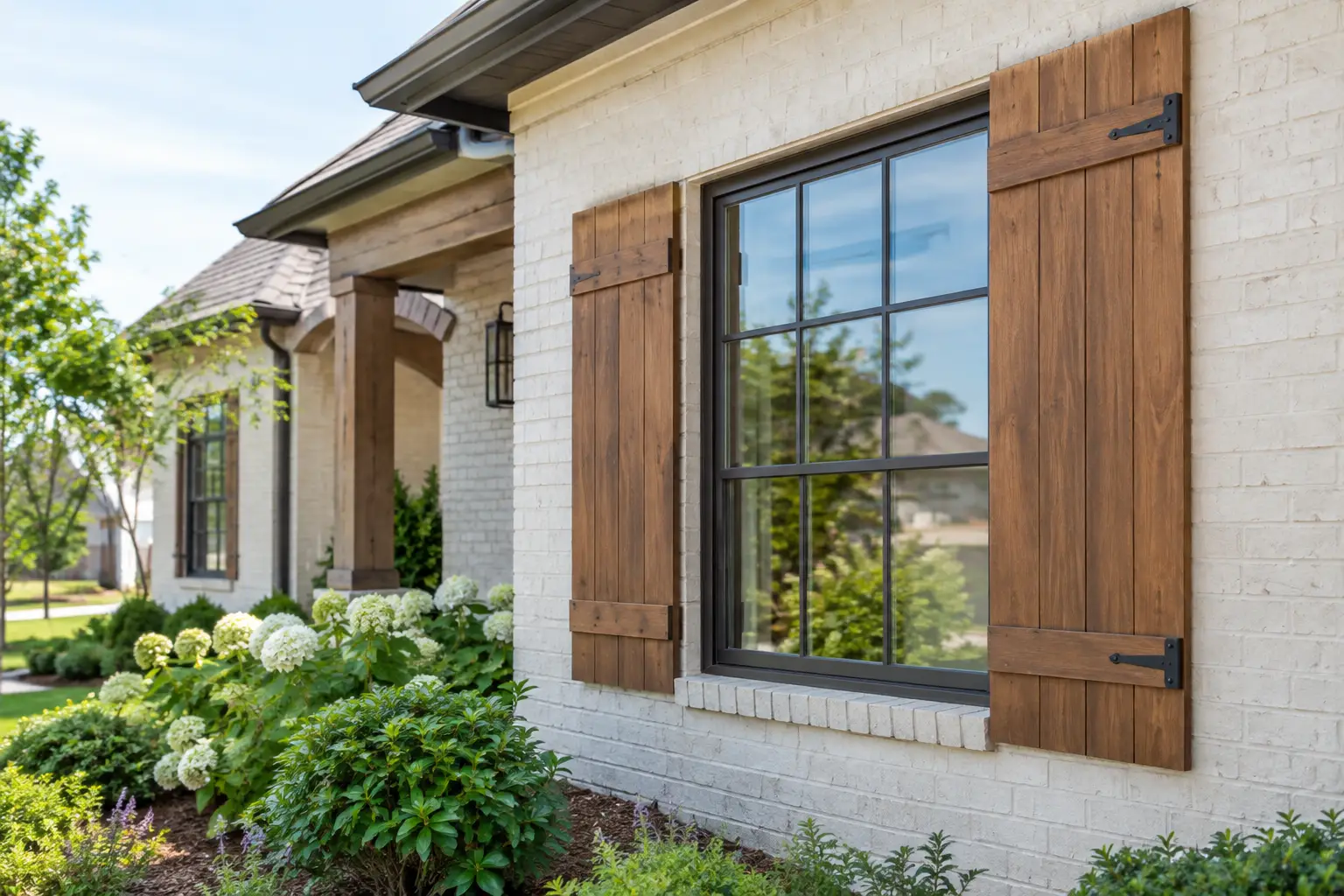
A window can be the right size and still look unfinished. Often, the missing piece is proportion: trim that feels too plain, a facade with no depth, or shutters that are clearly too narrow for the opening. Custom exterior wood shutters solve that problem by being made for the actual house, not selected from a limited shelf size.
For Tulsa-area homeowners, wood shutters can add more than decorative detail. They can help give a traditional home more presence, soften the lines of siding or brick, and tie together a front entry, replacement windows, porch, or exterior refresh. The key is treating shutters as part of the home's architecture rather than an afterthought.
Why Custom Exterior Wood Shutters Look Different
Stock shutters are made to serve broad window sizes and broad design tastes. That can be convenient, but it also creates the familiar problem of shutters that look undersized, oddly placed, or disconnected from the home's trim. A custom approach starts with the window opening, the available wall space, and the proportions of the home itself.
A well-sized shutter should look as though it belongs beside the window. If it is intended to resemble an operable shutter, each panel should generally be sized to cover half of the window opening when closed. Decorative shutters do not always need to follow that rule exactly, especially where wall space is limited, but they should still feel visually believable.
That attention to scale matters on every type of home. A small bungalow may need simple panels that do not overwhelm the front elevation. A larger colonial or traditional home may call for wider shutters, divided panels, or a stronger contrast in color. Brick, siding, stone accents, trim width, and roofline all affect the right choice.
Wood Brings Character, With a Maintenance Trade-Off
Wood has a warmth and depth that manufactured materials often cannot match. It can be shaped, detailed, painted, or stained to complement the character of an established home. Custom woodworking also makes it possible to create a shutter profile that coordinates with existing porch posts, decorative trim, or other exterior details.
That character comes with responsibility. Exterior wood needs a properly maintained finish to help it stand up to sun, rain, humidity, and changing temperatures. In northeastern Oklahoma, strong summer sun and seasonal storms can be hard on any exterior surface. Painted or stained wood should be checked periodically for peeling, cracking, fading, loose fasteners, or areas where moisture may be getting behind the finish.
For some homeowners, that maintenance is part of the value of real wood. Others may prefer a lower-maintenance exterior material, particularly on hard-to-reach upper windows. There is no single right answer. The best decision depends on the home's style, the desired appearance, the location of the shutters, and how much ongoing care makes sense for the household.
Choosing a Shutter Style That Fits the House
The style should support the home, not compete with it. Board-and-batten shutters have a straightforward, handcrafted look that works well with cottages, farmhouses, ranch homes, and many traditional exteriors. Raised-panel shutters tend to suit more formal or historic-inspired homes. Louvered styles can add texture and a classic look, though the details need to be scaled carefully so they do not appear too busy from the street.
Color deserves the same thought. Deep green, black, charcoal, navy, and rich brown can create contrast against light siding or brick. A painted color that echoes the front door can make the exterior feel more coordinated. On a home with dramatic stone or multicolored brick, a quieter shutter color may be the better choice.
The goal is not to follow a trend for its own sake. It is to choose an option that will still feel right after the current color palette or decorating fashion has changed.
Decorative or Operable Shutters?
Most exterior shutters installed today are decorative. They are securely mounted on either side of the window to add depth and architectural interest. This is often the practical choice for modern windows, windows with screens, or openings where truly closing shutters would not be useful.
Operable shutters are functional panels mounted with hardware so they can swing closed. They can be an appropriate option for certain homes and window locations, but they require more planning. The wall surface, window trim, clearance, hinges, holdbacks, and panel construction all need to work together. They also need to be sized correctly enough to close over the window.
A clear conversation about how you want the shutters to look and function helps determine which path makes sense before work begins.
Details That Make a Custom Installation Feel Finished
Good shutter design is not just about the panel itself. Mounting position, spacing, fasteners, trim, and hardware affect the finished appearance. A shutter placed too far from the window can look detached. One placed too close to thick trim can feel crowded. On uneven brick or siding, careful layout matters even more.
It is also worth looking beyond one window at a time. Front-facing windows should relate to one another, even if they are different sizes. A balanced layout may require slightly different panel widths or configurations so the home reads as a complete elevation rather than a collection of individual additions.
Older homes sometimes bring additional considerations. Existing trim may be deteriorated, siding may need repair, or a previous installation may have left holes and patchwork behind. Addressing those conditions before new shutters go up creates a cleaner result and helps avoid covering up a problem that should be repaired.
When Shutters Work Best as Part of a Larger Exterior Plan
Shutters can make a meaningful difference on their own, especially around a front entry or a prominent bank of windows. But they are also a smart finishing element during a broader exterior project. New siding can change the visual depth of a wall. Replacement windows may alter frame color or proportions. A porch update can introduce new columns, railings, or trim that call for a more intentional facade.
Planning these elements together helps prevent mismatched colors and repeated work later. It does not mean every improvement has to happen at once. It simply means considering what the house may need next so today's choices support that direction.
For example, a homeowner preparing to replace aging siding may want to wait before installing shutters, since placement and trim details can be coordinated during the siding work. On the other hand, a house with sound siding and plain front windows may benefit from shutters now as a focused curb-appeal improvement.
What to Discuss Before Ordering
Before a custom shutter project moves forward, it helps to talk through a few practical questions: Which windows should receive shutters? Is the goal historic character, stronger curb appeal, or a more balanced exterior? Should the shutters be decorative or operable? Will their color coordinate with the door, trim, or future siding plans?
It is equally useful to discuss the condition of the surrounding surfaces. A quality shutter installation relies on a sound mounting area. If trim or siding needs attention first, that should be part of the plan rather than a surprise after materials are made.
Shipman Home Improvement approaches these projects with the same practical mindset used for larger remodeling and exterior work: start with what you want to accomplish, look closely at the home, and offer straightforward guidance without pressure. Custom craftsmanship is most useful when it serves the house and the homeowner's priorities.
A Small Detail With a Lasting Effect
Exterior shutters are not the answer for every window or every architectural style. A clean, shutter-free facade can be the right choice when windows are tightly grouped, wall space is limited, or the home already has enough detail. But where shutters fit, custom sizing and thoughtful installation can turn a flat-looking exterior into one that feels settled, balanced, and genuinely cared for.
The best place to begin is with the windows you notice first when you pull into the driveway. If they need more presence, custom wood shutters may be the detail that helps the rest of the home feel complete.