
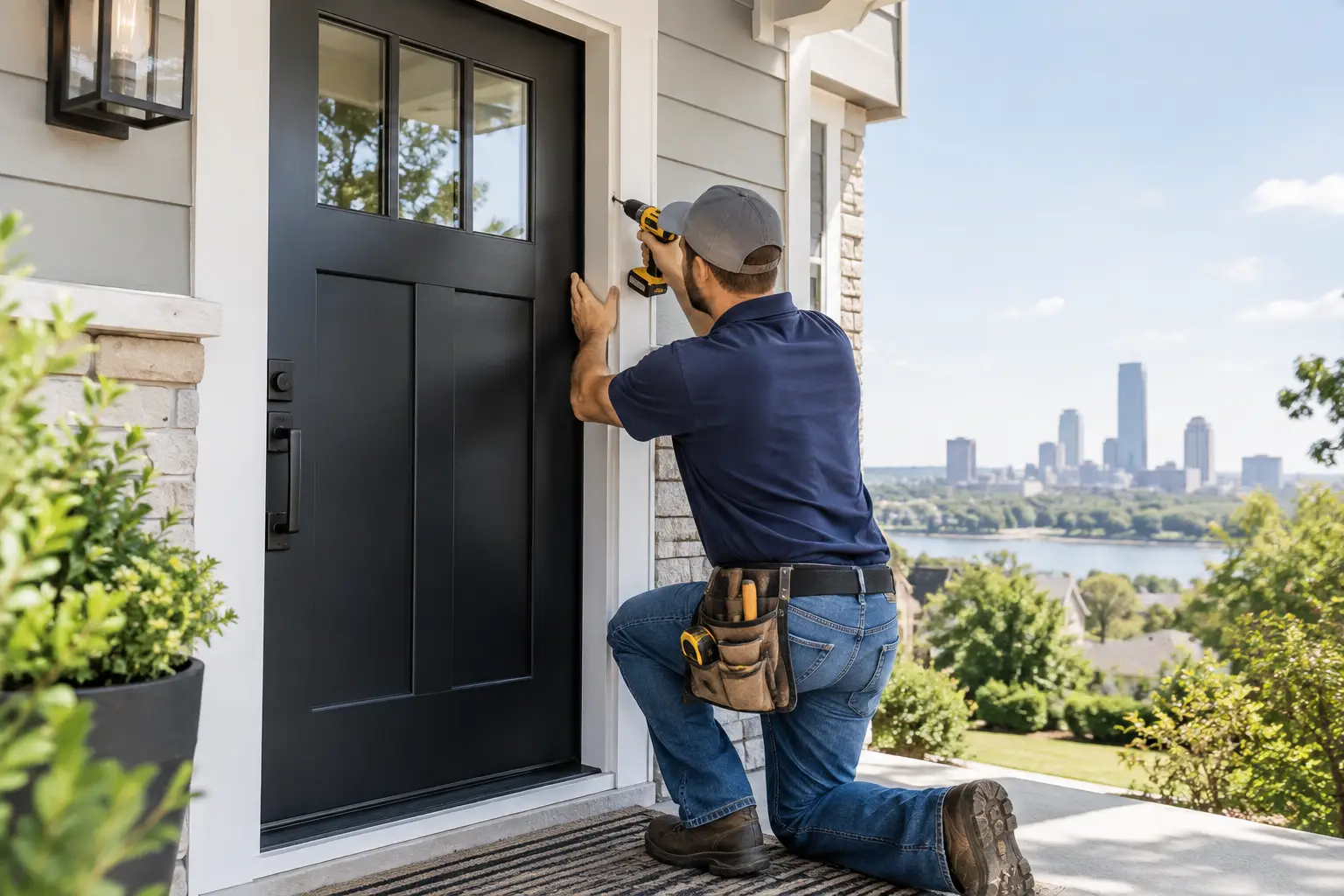
A front door can look solid from the sidewalk and still be working against your home. It may stick when Oklahoma humidity rises, let in a draft on a cold morning, or show a widening gap that invites rain and insects. That is why exterior door installation Tulsa homeowners choose should begin with more than picking a color or panel style. The opening, the frame, the threshold, and the condition of the surrounding wall all deserve a close look.
A replacement exterior door is a visible upgrade, but its best benefits are often felt indoors. A properly selected and carefully installed door can improve daily use, support weather protection, refresh curb appeal, and help the entry feel like it belongs to the house rather than being an afterthought.
A Door Is Only as Good as Its Installation
An exterior door has a demanding job. It needs to open and latch easily, keep out weather, stand up to frequent use, and look right alongside the home's windows, siding, brick, or trim. A quality door helps, but the installation determines whether those features can do their job.
The first consideration is the opening itself. Older Tulsa-area homes can have settled framing, worn thresholds, out-of-square jambs, or water-related damage around the sill. Installing a new unit into an existing opening without accounting for those conditions can leave a homeowner with the same old problems in a newer-looking door.
A careful installer checks the dimensions, the level of the sill, the condition of the framing, and how the door relates to the exterior finish. The goal is a door that swings smoothly, closes securely, and has even, appropriate contact around the weatherstripping. Small adjustments matter here. A hinge set slightly out of alignment or a poorly supported threshold can create trouble that becomes more noticeable over time.
Choosing an Exterior Door for Your Home
There is no single best exterior door for every house. The right choice depends on where the door is located, how it is used, how much exposure it gets, and what you want the project to accomplish.
A front entry often calls for a balance of appearance, light, privacy, and security. Decorative glass can brighten a foyer, but the amount and placement of glass should fit the home's layout and the homeowner's comfort level. A solid-panel design may make more sense for an entry facing a busy street, while sidelights can be a good option when the doorway and interior space can support them.
Back and side doors are usually more practical decisions. These doors may see muddy shoes, pets, groceries, children, and frequent trips to a deck, porch, or yard. Durability, ease of operation, and a dependable threshold may matter more than decorative details. If the door opens onto a new or existing deck, its swing direction and landing clearance are worth discussing before work begins.
Material is another decision that deserves a real conversation. Fiberglass doors are often chosen for their versatility and ability to work with many home styles. Steel doors can be a practical option for certain entrances. Wood offers distinctive character but may require more attention depending on its exposure to sun and moisture. The right material is not simply the most expensive one. It is the one that fits the home, the entry, and the owner's expectations for maintenance and appearance.
Think About Exposure, Not Just Style
Tulsa weather can be hard on exterior surfaces. Heat, sun, wind-driven rain, temperature swings, and seasonal moisture can all affect an exposed entry. A protected front porch gives a door a different environment than a side entry with no overhang.
That does not mean an exposed opening cannot receive a beautiful new door. It means the project should account for the conditions. The finish, material, trim details, threshold, and water-management approach should all make sense for that specific location. A clear assessment upfront can prevent disappointment later.
What a Careful Installation Process Looks Like
Homeowners do not need to become door-installation experts. They should, however, know what a thoughtful process involves. It starts with a project discussion focused on your goals: Are you replacing a door because of drafts, damage, difficult operation, appearance, or all of the above? Do you want more daylight, a more welcoming entry, or a better transition to an outdoor space?
From there, accurate measurements and an inspection of the opening help shape the recommendation. This is also the time to discuss trim, surrounding siding or brick conditions, and any repairs needed before the new door goes in. An honest conversation is especially valuable when the visible problem is only part of the issue.
During installation, the old door and related components are removed as needed so the opening can be evaluated. The new unit must be positioned correctly, secured, adjusted, and sealed with attention to the sill and exterior details. The goal is not to force the door into place. It is to create a stable, weather-conscious assembly that works as intended.
Final adjustments should include checking the swing, latch, lock alignment, reveal around the door, and contact with weatherstripping. The details may not be glamorous, but they are what make the difference between a door that looks finished and a door that feels finished.
Signs It May Be Time to Replace Your Exterior Door
A door does not have to be falling apart before it deserves attention. Sometimes the signs are subtle: a persistent draft near the entry, daylight around the edges, moisture marks on interior trim, or a latch that only catches when the door is lifted or pushed.
More obvious concerns include rot, soft wood near the sill, rust, dents, cracked glass, damaged panels, or a threshold that has become a tripping concern. Repeated sticking can also point to more than a seasonal nuisance. It may reflect movement in the opening, worn hardware, or a door that is no longer properly supported.
If you are preparing to sell, an entry door can be one of the first things visitors notice. If you are staying for years, it can be a daily improvement in comfort and convenience. Either way, replacement should be based on the condition of the existing door and your plans for the home, not a rushed sales pitch.
Coordinate the Door With the Rest of the Exterior
An exterior door project can stand alone, but it can also be a smart part of a larger plan. New siding, replacement windows, porch work, exterior trim repairs, or custom wood shutters can change how an entry should look and function. Coordinating the work can help create a more intentional result, especially on older homes where details have been added or changed over the years.
For example, a new door may reveal trim that no longer matches the condition of the entry. A porch update may change the available clearance or improve protection from the weather. Replacing nearby windows may influence glass patterns, colors, or proportions. These are not reasons to make every project bigger than necessary. They are reasons to look at the home as a whole before deciding where to invest.
Shipman Home Improvement has worked with Tulsa-area homeowners since 1982, taking a practical, project-specific approach to doors and the exterior details around them. The best starting point is a clear, no-pressure conversation about what is not working and what you want to accomplish.
Questions Worth Asking Before You Commit
Before selecting a contractor or ordering a door, ask how the existing opening will be evaluated, whether damaged framing or trim will be discussed if discovered, and how the threshold and exterior sealing will be handled. Ask what options make sense for your entry's exposure and how the door's style will work with the rest of your home.
You should also feel comfortable asking about the schedule, what areas of the home will be affected during the work, and what you need to do beforehand. Straight answers are part of good craftsmanship. A contractor should help you understand the scope without making the decision feel more complicated than it needs to be.
A new exterior door should make coming home easier. When the fit is right, the operation is smooth, and the details suit the house, it becomes one of those practical improvements you notice every day for the right reasons.