
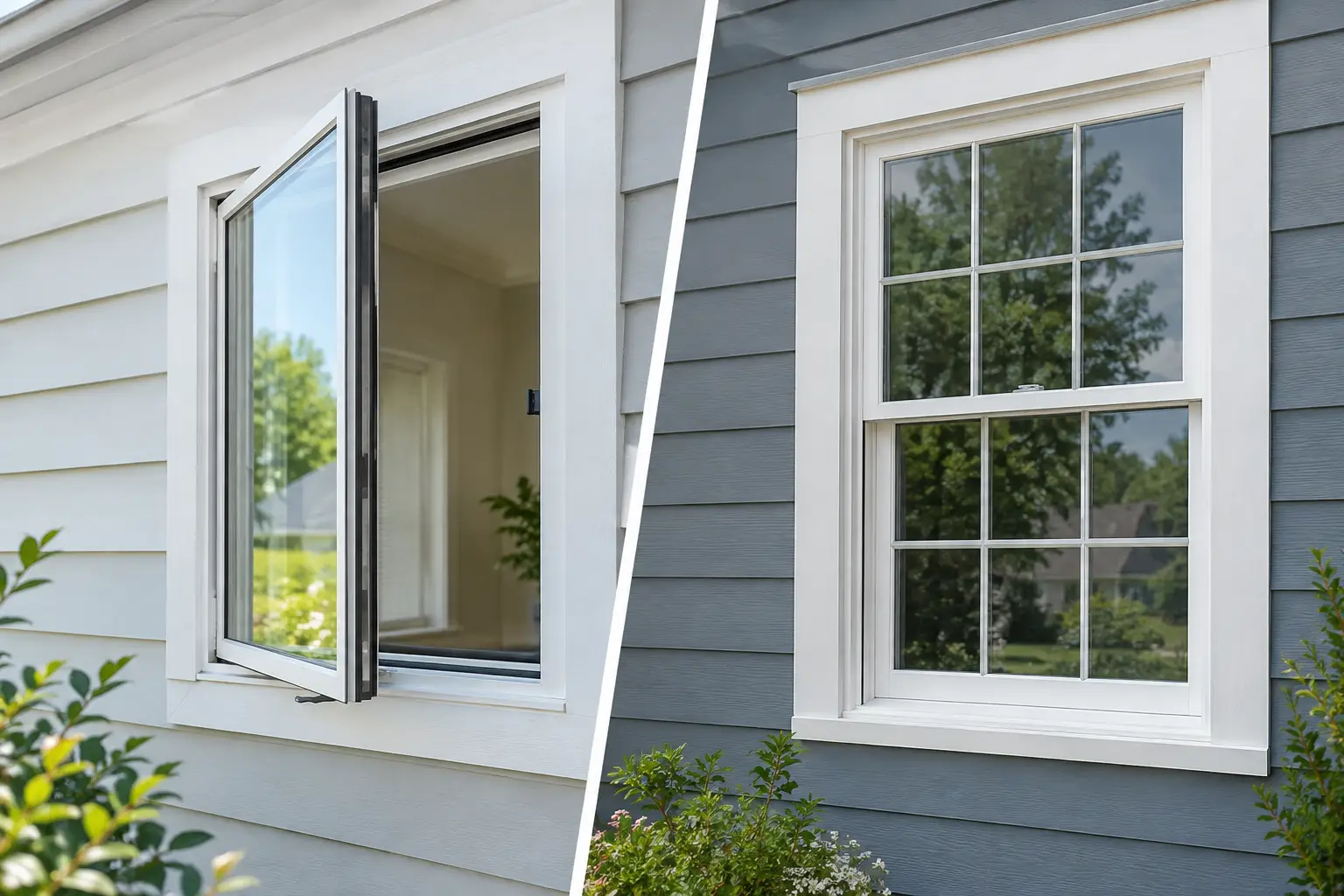
A window over the kitchen sink, beside a patio, or in an upstairs bedroom does more than bring in light. It affects how a room vents, how easily you can clean the glass, and how comfortable that part of the house feels through an Oklahoma summer or a cold, windy day. When comparing casement versus double hung windows, the better choice usually comes down to where the window will go and how your family uses that room.
Both styles can be attractive, durable options for a replacement-window project. They operate differently, however, and those differences matter once the windows are installed. A clear look at airflow, access, appearance, and everyday upkeep can help you choose with confidence.
Casement Versus Double Hung Windows at a Glance
A casement window is hinged along one side and swings outward, much like a door. It is usually opened with a crank at the bottom of the frame. When closed, the sash presses firmly against the frame, creating a tight seal.
A double hung window has two vertical sashes that slide up and down. You can open the lower sash, lower the upper sash, or open both at the same time. Many modern double hung windows also have tilt-in sashes that make exterior glass easier to clean from indoors.
Neither style is automatically right for every house. A casement window may be the practical answer where reaching a sliding sash would be difficult. A double hung window may better suit a traditional home facade or a room where an outward-swinging sash would get in the way.
Airflow: Where Casement Windows Often Stand Out
Casement windows are known for ventilation. Because the sash swings outward, it can help catch a passing breeze and direct it into the room. This can be especially useful on the side of a home that receives regular wind.
The entire window opening is available for air when the window is open. That makes casements a strong option for kitchens, bathrooms, sitting areas, and other rooms where fresh air is a priority. Their crank operation also makes them convenient over a countertop, behind a sofa, or in another location where leaning across to lift a sash would be awkward.
Double hung windows provide flexible ventilation of a different kind. Opening the lower sash lets fresh air enter, while lowering the upper sash can allow warm air to escape. Opening both sashes partway can encourage circulation without leaving a large opening at the bottom.
For families with young children, that upper-sash option may be useful because it can bring in air while keeping the lower opening closed. Screens remain an important part of the decision with either style, particularly during mosquito season.
Energy Efficiency Depends on More Than Window Style
A well-made, professionally installed casement window can provide an excellent seal. As the sash closes, its locking points pull it snugly against weatherstripping. This compression-style closure is one reason homeowners often consider casements when drafts around older windows are a concern.
Double hung windows have more moving sections and tracks, so their design is different. That does not mean they are inefficient. Quality replacement double hung windows with appropriate glass, weatherstripping, and proper installation can make a meaningful improvement over worn or poorly fitting older windows.
The larger lesson is that the window style alone does not determine comfort. Glass package, frame construction, the condition of the opening, insulation around the frame, and careful installation all affect the finished result. A good replacement-window discussion should account for the direction the wall faces, sun exposure, existing drafts, room use, and the condition of the surrounding trim or siding.
In the Tulsa area, homeowners often need windows that can handle strong sun, changing temperatures, rain, and gusty storms. The right configuration is one that suits the home as a whole, not simply the one with the most appealing showroom feature.
Cleaning and Everyday Operation
Cleaning access is one of the clearest practical differences between these styles. Casement windows may be simple to clean from inside when the opening is at ground level or when you can safely reach the exterior side of the sash. On an upper floor, the outside glass can be harder to reach depending on the window’s location and how far it opens.
Double hung windows with tilt-in sashes are often easier for second-story cleaning. The sashes tilt inward, allowing a homeowner to clean both sides from inside the room. For homes with many upper-level windows, that convenience can carry real weight.
Casement hardware deserves consideration, too. The crank, operator arm, and hinges are working components that should be kept clean and used properly. A quality unit and correct installation help, but no moving window is maintenance-free forever. Double hung windows rely on balances, locks, and sliding tracks, which also benefit from routine care.
Think about who will operate the window most often. A crank can be easier for some homeowners than lifting a sash, while others prefer the familiar, straightforward action of a double hung window. Comfort with operation is a valid deciding factor, especially in a long-term home.
Appearance and How Each Style Fits a Home
Double hung windows have a classic vertical look that works naturally with many traditional, Craftsman, Colonial-inspired, and older Tulsa-area homes. Their balanced proportions can preserve the character of an existing facade, particularly when multiple windows line the front of the house.
Casement windows tend to offer a cleaner, more open view because they often have fewer horizontal divisions. They can complement ranch homes, contemporary updates, and spaces where homeowners want to emphasize the view or bring in more daylight. Paired casements can make a wide opening feel generous without adding a center rail across the glass.
Grids, frame color, trim details, and window placement can shift the appearance considerably. A replacement window should look intentional from the street as well as from inside the room. If siding, exterior trim, or shutters are part of a larger update, considering those elements together can prevent a pieced-together look later.
Space Outside the Window Matters
This is the trade-off that is easy to overlook: a casement window needs room to swing outward. That may not be ideal near a walkway, deck, porch, exterior seating area, or a spot where landscaping sits close to the house. A strong wind can also catch an open casement, so it should be operated thoughtfully in exposed locations.
Double hung windows do not project beyond the wall. That makes them a practical choice beside paths, patios, and other busy outdoor areas. They can also work well where exterior shutters, shrubs, or architectural details would interfere with a swinging sash.
On the other hand, double hung windows may be less convenient in a tight interior arrangement if furniture blocks access to the lower sash. The best choice considers clearance on both sides of the wall.
Which Window Works Best in Each Room?
Casement windows often make sense over kitchen counters and sinks, in bathrooms, and in rooms where maximizing ventilation matters. They can also be a good choice for openings that are wider than they are tall or for locations where an unobstructed view is especially valuable.
Double hung windows are often a natural fit in bedrooms, upstairs rooms, front-facing elevations, and spaces where tilt-in cleaning is a priority. They may also be the better match when you want to maintain a home’s established architectural rhythm.
Some homes benefit from using both. There is no rule that every replacement window must be the same operating style. Matching the window to the room can improve function while keeping the exterior design cohesive. The key is choosing proportions, finishes, and details that work together.
Make the Decision Around Your Home, Not a Trend
A window replacement is most successful when it solves the problem you actually have. If a room feels stuffy, a casement may improve ventilation. If second-story cleaning has become a chore, tilt-in double hung windows may be more practical. If your current windows leak air, stick, show moisture damage, or no longer suit the house, it is worth looking at the whole opening before settling on a style.
Shipman Home Improvement has helped local homeowners make practical exterior improvements since 1982. A no-pressure conversation can help sort through window style, placement, exterior details, and installation considerations based on the home in front of you.
The best window is the one you will appreciate on an ordinary day: easy to open, easy to live with, suited to the room, and fitted with the care your home deserves.