
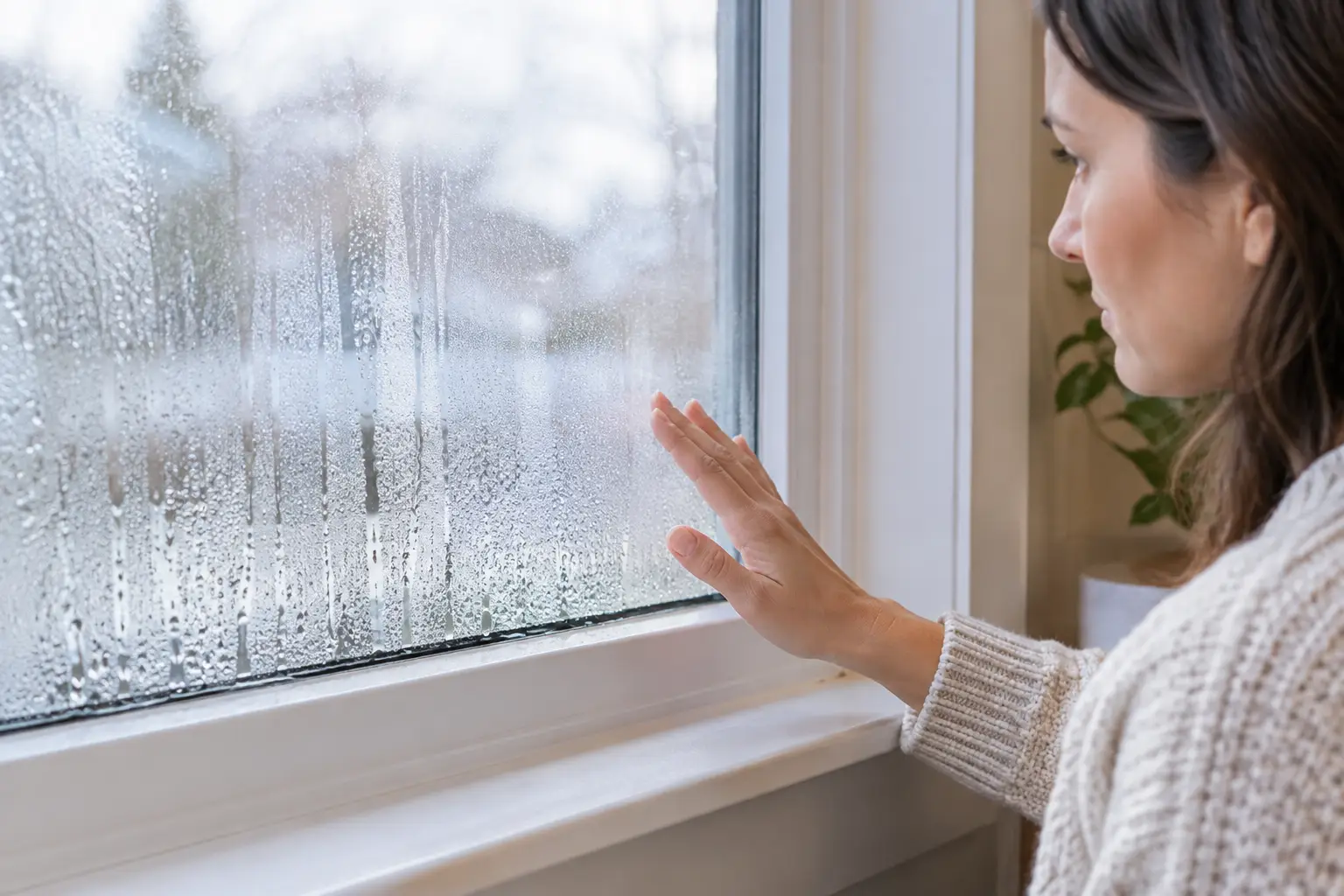
A window that looks foggy on a cold morning can be unsettling, especially when water begins to collect on the sill or drip onto nearby trim. Window condensation causes are not always a sign that a window has failed. More often, they point to a meeting of warm indoor air, cool glass, and excess moisture inside the home. Where that moisture appears makes a major difference in deciding what to do next.
For Tulsa-area homeowners, changing weather can make the issue seem to come and go. A cold snap, a stretch of rainy weather, or a busy household producing more indoor moisture can all bring it to the surface. The goal is not simply to wipe the glass dry. It is to understand why the condensation is forming and whether the window, the room, or both need attention.
The Basic Science Behind Window Condensation Causes
Air holds water vapor. Warm air holds more of it than cold air. When warm, humid indoor air touches a cold surface, such as window glass, the air cools and releases water in the form of droplets. That is condensation.
Windows are often the first place homeowners notice this because glass can be much colder than an insulated wall. Older single-pane windows, aging frames, and windows with poor air sealing allow interior surfaces to get colder still. But even high-quality replacement windows can show some interior condensation when indoor humidity is high enough and outdoor temperatures drop far enough.
The location of the moisture provides the first useful clue. Condensation on the room-side surface of the glass usually relates to indoor humidity and the temperature of the window surface. Moisture on the outside of the glass is often harmless. Fog or droplets trapped between panes are different and can indicate a failed insulated glass seal.
Condensation on the Inside of the Window
Interior condensation is the most common concern. It may appear as a light haze at the bottom of the glass, beads of water around the edges, or enough moisture to dampen the sill. A little temporary condensation after a shower, cooking session, or sudden weather change is not unusual. Persistent moisture deserves a closer look.
High indoor humidity
Daily living adds moisture to a house. Cooking, showering, bathing, doing laundry, running a humidifier, and even a house full of people can raise indoor humidity. Homes that are tightly sealed for energy efficiency may retain more of that moisture unless it has a practical way to leave.
Bathrooms and kitchens are common trouble spots because they create moisture quickly. If condensation appears mainly after showers or meals, the window may be showing the effects of the room rather than a defect in the glass. Using bathroom exhaust fans during and after showers, covering pans while cooking, and checking that ventilation is directed outdoors can help reduce the load.
Houseplants, aquariums, and drying clothes indoors can contribute as well. None of these habits is automatically a problem, but together they can raise humidity enough to show up on cold windows.
Cold glass and older window construction
The colder the interior glass surface, the easier it is for condensation to form. Single-pane windows have very little insulation value. Older double-pane units may also have less effective glazing, worn weatherstripping, or frames that conduct outdoor temperatures inward.
Cold spots around a window can make condensation worse. Air leaks, gaps in the frame, or aging caulk may allow cold outdoor air to reach the window area. In some cases, the window itself is sound but the installation details around it need repair. In others, the window has reached the point where replacement is the more practical long-term choice.
Blocked airflow at the glass
Warm room air helps keep the inside surface of a window warmer. Heavy curtains pulled tight across the window, tightly closed blinds, and furniture placed directly in front of heating vents can restrict that airflow. The result can be condensation behind the covering even when the rest of the room seems comfortable.
Try opening blinds and curtains during cold weather, particularly overnight, or leave them slightly raised to let air circulate. This will not solve a major humidity problem, but it can reduce moisture on the glass and help you see whether poor airflow is contributing.
Why Condensation Between Window Panes Is Different
Double- and triple-pane insulated glass units are built with sealed spaces between the panes. When that seal fails, outside air and moisture can enter the space. The result is fogging, streaks, or moisture that cannot be wiped from either side of the glass.
This is not the same as interior surface condensation. Cleaning the window, running a fan, or lowering household humidity will not remove moisture trapped between panes. A failed seal can reduce the window's insulating performance and affect its appearance, but the right repair depends on the window's age, condition, and construction. Sometimes the glass unit can be addressed; other times, replacing the window makes more sense.
A clear, no-pressure conversation with an experienced window professional can help sort out those options. The useful question is not just, “Can this be fixed?” It is, “What condition is the frame in, and what solution fits this home's needs?”
What Exterior Window Condensation Usually Means
Seeing dew on the outside of a window can look alarming, but it is often a positive sign. Exterior condensation occurs when the outdoor surface of the glass is cooler than the outdoor air's dew point. It is common on clear, humid mornings, especially on energy-efficient windows that keep indoor heat from warming the exterior pane.
Unlike moisture indoors, exterior condensation does not generally threaten the sill, interior trim, or wall. It usually disappears as the sun and outdoor temperature change. If the water is clearly on the outside surface, it rarely calls for repair.
When Condensation Can Damage Your Home
Repeated interior moisture is more than a visibility issue. Water that runs down glass can soak wood sills, stain painted trim, swell finishes, and create conditions where mildew may develop. Peeling paint, soft wood, dark staining, or a musty odor near the window are signs to take seriously.
Condensation can also reveal other areas worth checking. Water on windows may coincide with moisture on cold exterior walls, inside closets, or around poorly insulated areas of the home. The window is often the most visible symptom, not always the only one.
Do not assume every wet window means the entire house needs new windows. Likewise, do not dismiss recurring water simply because the glass is old. The best answer depends on how often it happens, where it occurs, whether moisture is forming on the glass or between panes, and whether surrounding materials show damage.
Practical Ways to Reduce Interior Condensation
Start by observing the pattern for a week or two. Note which rooms are affected, the outdoor temperature, and whether condensation follows showers, cooking, or other moisture-producing activities. That information makes the cause easier to narrow down.
Keep humidity at a reasonable level during cooler weather. A simple indoor humidity monitor can provide useful guidance, though the right reading depends on outdoor conditions. When temperatures fall sharply, a humidity level that felt comfortable a few days earlier may suddenly be high enough to create condensation. Reducing humidifier use, improving room ventilation, and using exhaust fans consistently can make a noticeable difference.
Keep window tracks and weep areas clean so incidental moisture can drain as designed. Wipe up standing water promptly, including moisture on the sill and lower frame. Open blinds or curtains enough to let air move across the glass, and make sure furniture is not blocking the room's normal airflow.
If one or two windows are consistently colder, draftier, or more affected than others, inspect the area for worn caulk, damaged trim, or obvious gaps. A localized issue may call for a targeted repair. If multiple older windows show condensation, drafts, deteriorated frames, or fogging between panes, it may be time to discuss replacement as part of a broader exterior improvement plan.
When to Ask for a Window Evaluation
A professional evaluation is particularly helpful when condensation remains after humidity and airflow changes, when fogging is trapped between panes, or when water has begun to affect trim or wall finishes. It is also worthwhile when windows feel drafty, are difficult to operate, or show signs of frame deterioration.
For homeowners in Tulsa and surrounding communities, Shipman Home Improvement can look at the full picture: the window condition, installation details, surrounding trim, and the practical outcome you want for your home. Some situations call for repair and maintenance. Others point to replacement windows that better support comfort, appearance, and weather protection.
A dry window is helpful, but the larger goal is a home that manages moisture well and feels comfortable through changing weather. Pay attention to where condensation forms, protect nearby woodwork, and address recurring patterns before a small amount of water becomes a larger repair.