
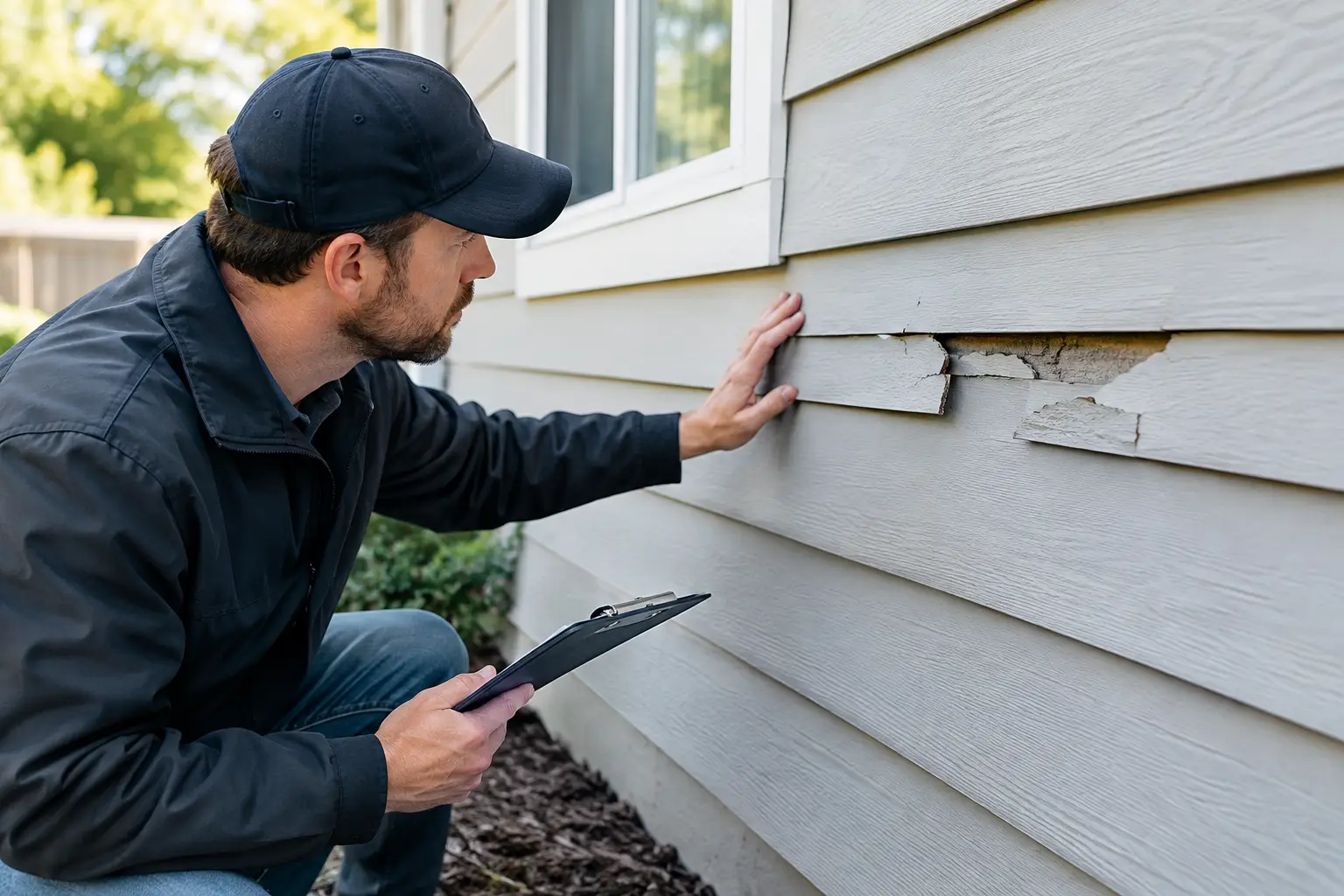
A loose siding panel can be easy to dismiss, especially when it is on the side of the house you rarely see. But that small opening may be an invitation for wind-driven rain, insects, and moisture to reach the materials behind it. Knowing how to inspect siding damage gives you a practical way to catch concerns while they are still manageable.
You do not need to climb a ladder or take anything apart to make a useful first inspection. In fact, the best starting point is a careful walk around the home, followed by a closer look at the areas where siding meets windows, doors, trim, foundations, and rooflines. Bring your phone to take photos, and keep notes on where you see each issue. This makes it much easier to tell whether a condition is changing over time.
Start With a Slow Walk Around the House
Choose a dry day with enough daylight to see surface details. Stand back first. Look along each wall at an angle rather than straight on, because sunlight and shadows often reveal warping, uneven courses, and panels that no longer sit flat.
Pay attention to whether one wall looks different from the others. A patch of faded color can be ordinary weathering, but a concentrated dark area, a section that appears wavy, or siding that bows outward deserves a closer look. On Tulsa-area homes, the sides that receive the strongest sun and the walls exposed to frequent wind and rain can age differently.
As you walk, look for visible gaps at joints and corners. Siding is designed to shed water, but it cannot do its job well if panels have slipped, cracked, or separated from the trim. Also check the bottom edge near the foundation, where mulch, soil, standing water, and lawn equipment can create problems.
What Siding Damage Looks Like Up Close
The material on your home affects what damage looks like. Vinyl can crack, become brittle, or pull loose. Wood may split, soften, peel, or show signs of decay. Fiber cement can develop cracks or damaged edges, particularly around fasteners and openings. No matter the material, the question is the same: Is the siding still protecting the wall behind it?
Cracks, Holes, and Missing Pieces
Cracks and holes are among the clearest signs that repair is needed. A small puncture may come from a baseball, a lawn tool, or storm debris. Even if it looks minor, it can allow water behind the siding during heavy rain.
Look for missing pieces, chipped corners, and broken edges around utility penetrations, vents, and exterior fixtures. Check for panels that have come unfastened or appear to rattle in the wind. Do not pull hard on siding to test it. A gentle visual check is usually enough to identify a loose section without causing additional damage.
Warping, Buckling, and Loose Panels
Siding should lie consistently against the wall. If a panel has ripples, waves, or visible buckling, something may be interfering with its movement or attachment. Heat can affect some materials, but moisture behind the siding or problems with the wall surface can also contribute.
A panel that has simply slipped out of place may be a focused repair. Damage across several sections is different. When you see widespread buckling, repeated loose panels, or a wall that looks uneven, it is wise to have the condition evaluated rather than treating each spot as an isolated cosmetic issue.
Stains, Peeling Paint, and Moisture Clues
Discoloration is worth investigating because it can point to water exposure. Look for dark streaks below windows, around trim, at seams, and near gutters or downspouts. Green or black surface growth can develop where shade and moisture linger, but it should not be ignored if it returns after cleaning.
For painted wood siding or trim, peeling paint is more than an appearance concern. Paint helps protect the surface. When it fails, water can reach the wood more easily. Press lightly on suspect wood with the handle of a screwdriver or another blunt object. If it feels soft, spongy, or crumbly, stop there and arrange a professional assessment rather than probing deeper.
Inspect the Details Around Openings
Windows and doors create natural interruption points in the siding, which is why they deserve extra attention. Check whether the trim is separating from the wall, whether caulk has cracked or pulled away, and whether siding ends cleanly against the trim.
From inside the home, look around the same windows and doors for water stains, peeling paint, unusual drafts, or a musty smell. These signs do not automatically mean the siding is the source, but they give useful context. Exterior problems and interior clues together can help identify where further investigation is needed.
Also inspect transitions where siding meets brick, stone, porch posts, decks, and other exterior features. These connections need to direct water away from the wall. Gaps, failed sealant, or trim that has separated can let water travel where it does not belong.
Check the Lower Walls and Hard-to-See Areas
Some of the most revealing areas are the least noticeable. Walk the perimeter near the foundation and look for siding that is damaged by weed trimmers, buried under mulch, or sitting too close to the soil. Constant ground contact can hold moisture against certain siding materials and make future maintenance harder.
Look behind shrubs and near hose connections, air-conditioning equipment, and deck attachments. Plants pressed against the wall reduce airflow and hide developing damage. If branches scrape the siding, trim them back carefully. You want enough clearance to see the wall and allow it to dry after rain.
Do not forget the upper wall areas visible from the ground. Binoculars can help you inspect gable ends, dormers, and second-story corners without using a ladder. If you cannot see an area safely, that is a good reason to leave the closer inspection to a qualified professional.
Separate a Simple Repair From a Bigger Concern
Not every flaw calls for a full siding replacement. A single cracked panel, a small isolated hole, or a loose piece of trim may be repairable when the surrounding siding is sound and the underlying wall has not been affected. Matching the material, profile, and color can be the practical challenge, particularly on older siding that has faded over time.
The decision changes when damage repeats across multiple walls or appears alongside moisture clues. Soft wood, widespread cracks, recurring stains, significant panel movement, or gaps around several windows may mean the issue is no longer limited to the exterior surface. At that point, a repair may still be possible, but it should be planned after someone examines the condition behind and around the siding.
Age matters, but it is not the only factor. A well-maintained older siding system can perform better than a newer one with installation or water-management problems. The useful question is not simply, “How old is it?” Ask whether it is still shedding water, staying secure, and giving the home a finished, protected appearance.
When to Schedule a Professional Evaluation
Call for help if you see active water entry, extensive rot, large sections of loose siding, or damage following severe weather. You should also ask for an evaluation if you cannot determine whether a visible issue is surface-level or connected to the wall behind it.
A knowledgeable contractor can inspect the siding, trim, and surrounding transitions, then explain whether a targeted repair, maintenance work, or replacement deserves consideration. Shipman Home Improvement approaches that conversation with the same goal homeowners have: understand the condition of the home, discuss practical options, and make a decision without pressure.
Keep your inspection photos and note the date, wall location, and any changes you notice after storms or seasonal weather. A clear record turns a vague concern into useful information. Most importantly, do not wait for a small gap to become an indoor problem - a careful look today can help protect the work you have already put into your home.